
By Kim Smiley
Root cause analysis can be a very effective technique to analyze a problem. But what if the evidence trail goes cold? Is creating a Cause Map still useful when unanswered questions remain after a thorough investigation? The crash of a Comair jet in Lexington Kentucky on August 27, 2006 is a good example of this situation. The plane crashed during takeoff, killing 49 people . The flight crew mistakenly attempted to takeoff on the wrong runway, which was too short for the plane to reach the necessary speed for lift off. Even after a detailed investigation by the National Transportation and Safety Board, it still is not clear why the flight crew used the wrong runway. As an aside, the pilot and the first officer were competent professionals from all accounts and there is no history of either making errors of this magnitude.
Plane crashes are unique in the fact that there is a lot of data available to investigators. The cockpit voice recorder (CVR) records all conversations in the cockpit and the flight data recorder (FDR) records instrument readings. Usually the reason behind plane crashes can be determined using all this data. In this case, the information did provide some useful insight, but no clear reasons why the mistake occurred.
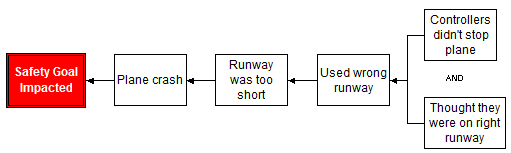
Buillding a Cause Map of this accident does make one thing very clear. There are many events that had to occur for this mistake to happen. One of the causes of the plane crash is clearly the error on the part of the flight crew, but another cause is the failure of the traffic controller to catch and correct the error. There were two separate windows of time where the controller had an opportunity to prevent the plane crash, but didn’t for a variety of reasons.
It’s tempting to say the plane crashed because the crew used the wrong runway and leave it at that. The main problem with this line of reasoning is that this conclusion doesn’t help prevent future crashes, especially since the error isn’t well understood. If all the focus is placed on why the wrong runway was used, an opportunity to improve the process and prevent future accidents is lost. In a case where there is missing information, building a cause map can be useful because it helps the investigation to explore all the causes and potential solutions. Only one cause needs to be eliminated to prevent the accident. For instances, the crew could had lined up at the runway and the accident could have still been prevented if the controller had caught the mistake. Focusing on a solution to eliminate the better understood causes provides a useful place to start.
Learn more about the Lexington Plane Crash.